· Ace High Property
The True Math of Green Buildings: Why Premium Rentals Save You Money in the Long Run
Evaluate office spaces by Total Cost of Occupancy (TCO). Discover how Green Star efficiencies offset higher base rentals to protect your bottom line.
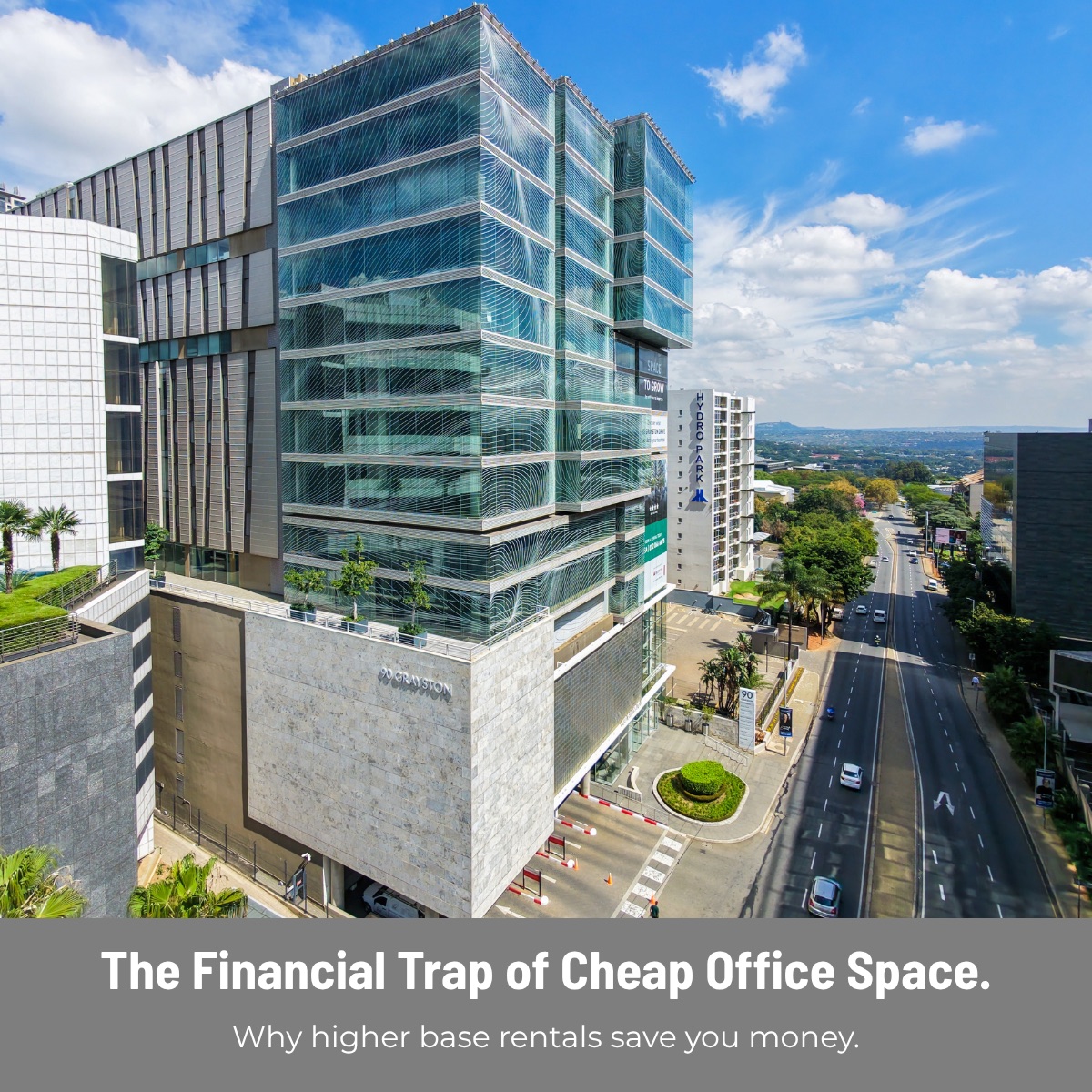
When corporate occupiers search for new office space across primary Gauteng nodes like Sandton Central or Bryanston, the initial filtering is almost always done on a single metric: the net base rental per square meter.
On paper, traditional, un-retrofitted buildings look like the budget-conscious choice compared to modern, Green Star-rated assets which frequently command a leasing premium. However, looking strictly at the base rental is a financial trap. Forward-thinking financial directors are shifting their focus to a much more accurate metric: The Total Cost of Occupancy (TCO). When you run the actual numbers over a standard three-to-five-year lease, Green Star-certified buildings regularly prove to be the cheaper financial option.
The Hidden Drain of Operational Costs
In a commercial lease, your monthly expenditure doesn't stop at the base rent. Tenants are heavily exposed to escalating municipal utility tariffs through triple-net lease structures and operational cost contributions. This is where the financial architecture of a Green Star-rated building completely changes the ledger. Assets engineered with sustainable infrastructure fundamentally lower the everyday consumption metrics of the space: • Smart HVAC & Micro-Zoned Climate Control: Heating and cooling make up the largest chunk of an office utility bill. Green buildings utilize advanced HVAC systems that automatically adjust based on occupancy and ambient outside temperatures, slashing electricity usage. • LED Grid Infrastructure & Daylighting: Maximizing natural architectural light through premium glass facades reduces the need for artificial lighting, while automated LED grids ensure lights are only drawing power in active zones. • Water Harvesting & Smart Plumbed Systems: With municipal water constraints becoming a localized reality, on-site rainwater harvesting and greywater systems insulate tenants from water outages while lowering overall consumption costs.
Mitigating the "Backup Premium"
In South Africa, business continuity requires robust backup generator infrastructure. However, running a massive diesel generator is an incredibly expensive exercise. Green Star buildings are designed to minimize an asset's base load. Because the building requires significantly less power to run its highly efficient lighting and cooling systems in the first place, it burns a fraction of the diesel during backup operational windows compared to an older, un-optimized building. That efficiency translates directly into lower diesel split levies for the tenants.
The Long-Term Bottom Line
Paying a premium on your base rental for a sustainable building isn't an act of corporate charity—it is a calculated investment in operational efficiency.
By shrinking your monthly utility exposure, insulating your team from resource scarcity, and aligning with modern ESG corporate compliance mandates, green-rated buildings effectively pay for themselves. For smart businesses looking to position their teams for the next five years, going green is no longer just an environmental decision; it is the most fiscally responsible move on the board.